
Password-less Authentication: Why Businesses Are Moving Beyond Passwords
Passwords are a major cybersecurity risk, enabling phishing, credential theft, and system breaches. Password-less authentication improves identity and access management, strengthens security, and supports secure cloud and remote work environments.
3/19/20264 min read
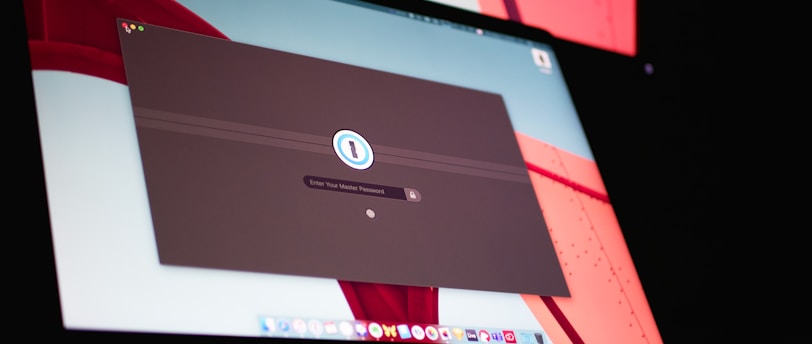

Passwords were designed for a simpler time. A time when people logged into one or two systems, worked from a single location, and cyber threats were limited. That environment no longer exists. Modern businesses operate across cloud platforms, remote workforces, mobile devices, and constantly connected systems. In this context, passwords have become a weak point rather than a safeguard.
Passwords are no longer fit for modern business. Phishing, reused credentials, and everyday human error make them the easiest way into company systems. Password-less authentication removes this weak point by verifying identity without relying on memory, improving both security and productivity.
The hidden problem is not technology. It is people. Passwords fail humans before systems fail.
Why strong passwords are no longer strong
Most organisations already enforce password policies designed to improve security. Longer passwords, complex character requirements, and regular password changes are common. While these controls appear effective on the surface, they place a heavy cognitive burden on users.
Employees are expected to remember numerous unique passwords across email, cloud services, internal applications, and third party platforms. To cope, people adapt in predictable ways. Passwords are reused. Small variations are created. Credentials are stored in browsers or written down. Patterns replace randomness.
This behaviour is not a lack of awareness or care. It is a natural response to overload. Even well trained employees struggle to manage password complexity without shortcuts.
As a result, one compromised password can expose multiple systems. What looks like strong security in policy often becomes fragile in practice.
How phishing bypasses passwords completely
Phishing remains the most common method used to gain unauthorised access to business systems. It does not rely on exploiting technical weaknesses. It exploits trust.
A phishing message is designed to look legitimate and urgent. It may appear to come from a trusted service, an internal contact, or a known supplier. The user is prompted to log in to resolve an issue. The login page looks familiar. Credentials are entered.
From the system’s point of view, authentication succeeds. The correct password was provided. There is no way for the system to determine whether the user intended to log in or was manipulated into doing so.
This is why strong password rules alone cannot prevent breaches. Passwords validate knowledge, not identity or intent.
The hidden cost of password resets and lockouts
Beyond security risks, passwords introduce a continuous operational cost. Forgotten passwords, expired credentials, and locked accounts are routine issues across most organisations.
Each incident may seem minor, but collectively they consume significant time. IT teams spend hours handling resets and access requests. Employees lose productivity waiting for access to be restored. Critical tasks are delayed.
There is also a less visible impact. Repeated interruptions erode trust in systems. Frustration increases. Over time, staff may begin sharing credentials or storing passwords insecurely to avoid delays.
Password based security does not just create exposure. It creates friction.
Why password rules do not change behaviour
When password related issues persist, the typical response is to increase complexity. Longer passwords. More characters. More frequent changes.
Unfortunately, stricter rules rarely lead to better outcomes. They increase pressure on users without addressing the underlying problem. Security controls that depend on flawless human behaviour are inherently fragile.
People do not bypass security because they are careless. They bypass it because they are trying to work efficiently. When security conflicts with productivity, productivity wins.
Effective security aligns with human behaviour rather than attempting to override it.
How password-less authentication removes the weakest link
Password-less authentication removes passwords from the process entirely. Instead of relying on something a user must remember, identity is verified through secure mechanisms such as trusted devices, cryptographic credentials, or controlled app based confirmation.
There is no password to steal, reuse, or guess. There is nothing meaningful to hand over in a phishing attempt. Without access to the verified authentication method, an attacker cannot log in.
By removing passwords, organisations eliminate one of the most commonly exploited points of entry into business systems.
Productivity gains no one talks about
Password-less authentication delivers benefits that extend beyond security. Logging in becomes faster and more consistent. Password resets and lockouts become rare. IT support workload decreases.
Employees experience fewer interruptions and smoother access to systems. Security becomes less visible but more effective. Over time, these improvements compound, leading to better workflows and higher confidence in IT environments.
These gains are rarely highlighted, yet they are often where businesses feel the biggest impact.
Why password-less is not just more convenient
Password-less authentication is often framed as a convenience improvement. In reality, it represents a shift in how security is designed.
Modern businesses operate across distributed teams, cloud services, and mobile environments. Relying on memory based security in this context introduces unnecessary risk.
By verifying identity rather than knowledge, password-less authentication strengthens security while reducing the burden on users. Convenience is a byproduct, not the objective.
This is why password-less authentication is becoming a standard approach rather than an optional upgrade.
Is password-less right for every business
Not every system needs to change at once. A successful transition focuses on high risk systems first and integrates with existing identity and access frameworks.
When implemented thoughtfully, password-less authentication supports compliance, improves audit visibility, and strengthens overall security posture without disrupting operations.
The goal is not fewer controls. It is more resilient ones.
Concerned that passwords may be creating unnecessary risk or inefficiency across your systems? Book a free identity and access review, here, and gain a clear view of where password-less authentication could strengthen security, reduce friction, and support safer growth.
Good IT doesn’t shout.
It quietly does its job.
You don’t need buzzwords. You need things to run, stay safe, and grow. And that’s exactly what we do.
Contact Us
Address: Level 35 / 100 Barangaroo Avenue, Sydney, NSW 2000
Phone: +61 2 9050 2293
Email: info@innovaitsolutions.com.au
© 2025 Innova IT Solutions. All rights reserved.
My post content